Warehouse Racking Solutions
Date Posted:24 March 2026
Warehouse Racking Solutions: How Smarter Warehouse Storage Systems Improve Efficiency, Safety and Space Utilisation
Why warehouse racking matters more than ever
A warehouse does not become inefficient overnight.
More often, performance slips gradually as stock increases, layouts become harder to manage, access slows down, and storage systems no longer match the way the business operates.
That is why warehouse racking is no longer just a storage decision. It is an operational one.
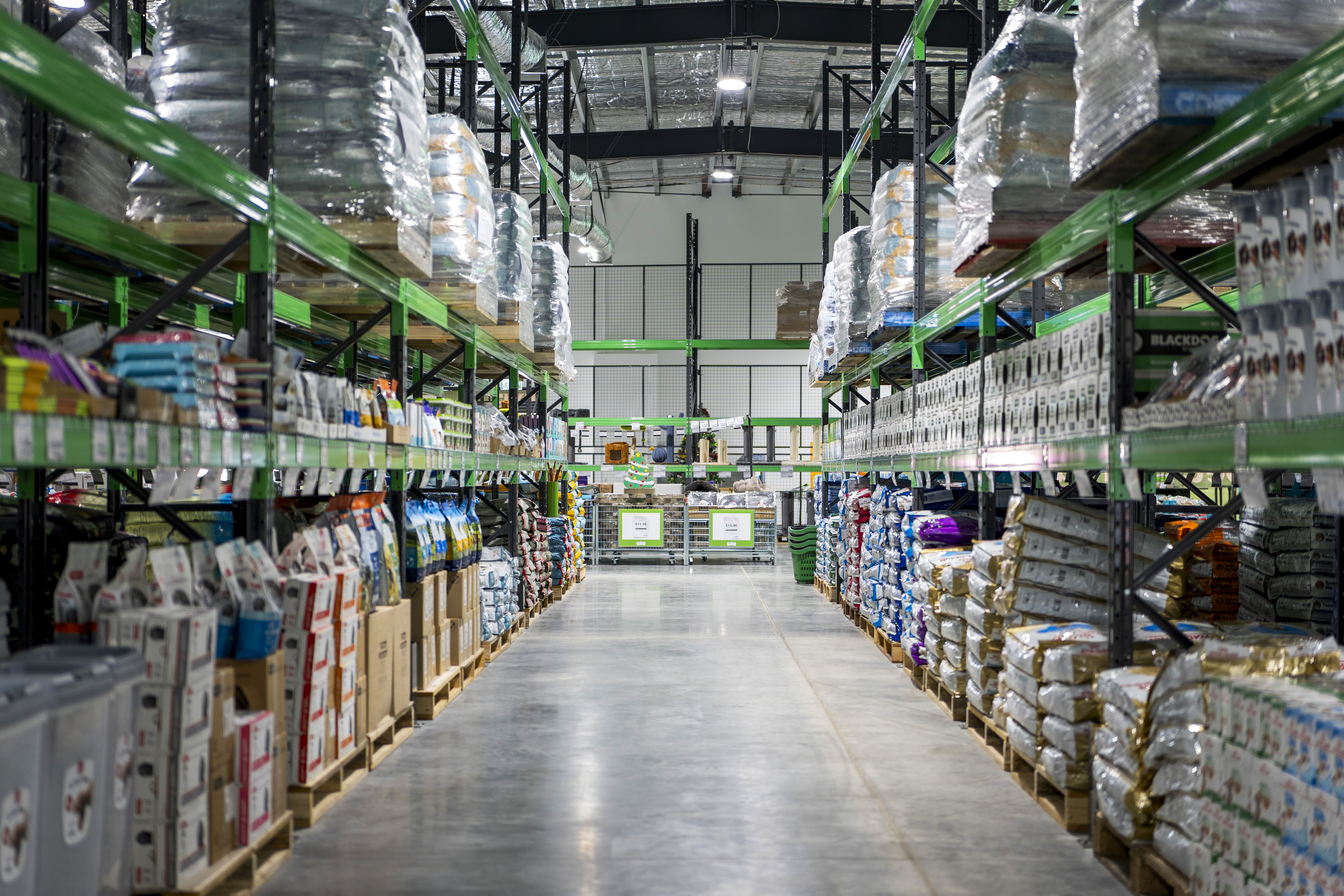
The right warehouse racking system can improve inventory access, increase storage capacity, support safer handling and make better use of every square metre. The wrong system can do the opposite — slowing down picking, reducing visibility, creating congestion and making future growth harder to manage.
For today’s retailers, distributors and trade businesses, smarter warehouse storage systems are essential. Businesses need storage solutions that improve flow, support stock control and adapt to changing inventory demands.
At Retail Fixtures Australia, we help businesses plan and deliver practical warehouse racking solutions, pallet racking systems and storage layouts that improve efficiency, safety and long-term warehouse performance.
Why outdated warehouse storage systems create operational friction
Many warehouses are still working with storage setups that were designed for a very different level of stock, handling method or operational demand.
As product ranges expand and supply chain pressure increases, older warehouse storage systems often start creating avoidable problems such as:
-
poor use of vertical space
-
reduced pallet accessibility
-
slower stock movement
-
difficulty managing stock rotation
-
congestion in aisles and picking zones
-
safety risks from damaged or overloaded racks
-
limited flexibility for changing inventory profiles
This is where the right warehouse racking system makes a major difference.
A better racking layout does more than increase storage. It helps create a warehouse that is easier to navigate, easier to manage and better aligned with the daily movement of goods.
How to choose the right warehouse racking system
Choosing the right warehouse racking solution starts with understanding how your warehouse actually functions.
Not every business needs the same layout, density or access pattern. The best system depends on what you store, how often stock moves and how your team needs to access inventory day to day.
Key factors to consider include:
1. Type of stock being stored
Different materials require different storage approaches. Palletised goods, long products, bulky items and irregular stock all place different demands on a warehouse racking system. Matching the racking style to the stock profile is one of the most important decisions in warehouse planning.
2. Weight and load requirements
A racking system must be designed around the weight and size of the products being stored. Load capacity, beam strength and bay configuration all matter when planning safe, durable warehouse pallet racking.
3. Accessibility and picking needs
Some operations need direct access to every pallet. Others prioritise dense storage for slower-moving stock. Understanding your picking frequency, replenishment cycle and stock rotation method helps determine the best fit.
4. Available warehouse space
The dimensions of the warehouse, ceiling height, aisle widths and traffic flow all influence what kind of warehouse storage racking will perform best. Vertical capacity is often underused in warehouse environments.
5. Future growth and flexibility
A warehouse racking system should not only meet today’s needs. It should also support future volume increases, changing inventory mixes and operational adjustments without forcing a full redesign too soon.
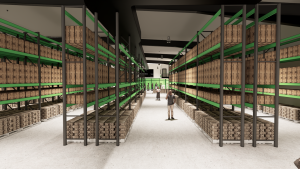
Common warehouse racking systems and where they work best
Different types of warehouse racking systems suit different storage needs. Selecting the right one can dramatically improve both storage density and stock accessibility.
Selective pallet racking
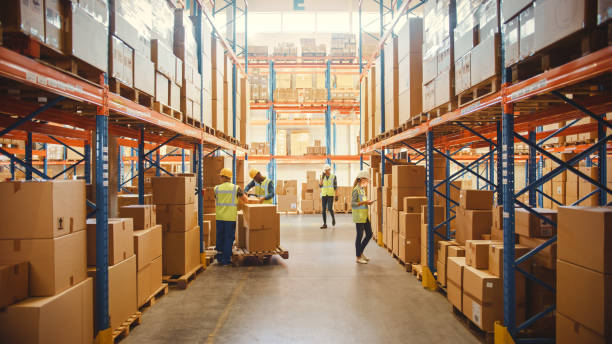
Selective pallet racking is one of the most widely used and flexible warehouse storage solutions. It provides direct access to each pallet, making it ideal for warehouses handling varied inventory with regular picking and replenishment.
This system is well suited to businesses that need:
-
fast access to individual pallets
-
flexible storage for multiple SKUs
-
easier stock control
-
straightforward reconfiguration over time
For many warehouses, selective racking offers the best balance between accessibility and storage efficiency.
Drive-in racking systems
Drive-in racking is designed for higher-density storage, allowing forklifts to enter storage lanes directly. This reduces the number of aisles and increases pallet capacity, making it a strong option for bulk storage and lower-SKU environments.
This type of warehouse racking system is often used where businesses need:
-
high-density pallet storage
-
efficient use of floor space
-
storage of large quantities of similar items
-
reduced aisle requirements
For slower-moving or bulk inventory, drive-in pallet racking can significantly increase storage density.
Cantilever racking
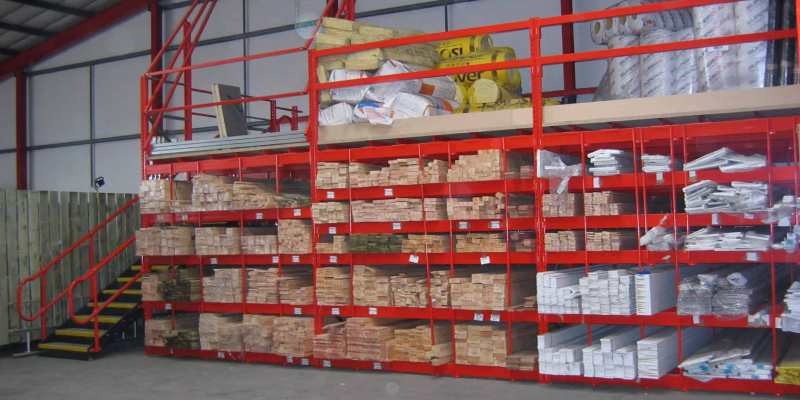
Cantilever racking is ideal for storing long, bulky or irregularly shaped items such as timber, pipes, steel sections and similar products. Its open-front design makes loading and unloading easier for stock that does not fit conventional pallet systems.
This system is especially effective for businesses storing:
-
long products
-
oversized items
-
awkward stock profiles
-
non-standard materials
For certain inventory types, cantilever warehouse racking provides a level of access and flexibility that standard pallet racking cannot.
How to maximise warehouse storage space with better racking design
For many businesses, the problem is not always warehousing size. It is how effectively the space is being used.
A smarter warehouse racking layout can increase storage capacity without requiring more floor area, which is why space utilisation should be a core part of any warehouse upgrade strategy.
Use vertical storage more effectively
One of the most common missed opportunities in warehouse design is vertical space. By using taller pallet racking systems, businesses can increase storage capacity while maintaining the same warehouse footprint.
Vertical storage strategies can include:
-
higher pallet racking
-
multi-level shelving
-
automated retrieval systems
-
vertical lift modules
-
mezzanine-supported storage zones
Where floor space is limited, better vertical storage can create major gains.
Optimise aisle widths and access paths
Aisle layout has a direct impact on both storage density and warehouse movement. Narrower aisles may increase capacity, but they also need to match forklift type, picking method and safety requirements.
The goal is to balance:
-
storage volume
-
equipment access
-
stock movement speed
-
worker safety
-
replenishment efficiency
Consider mezzanine and multi-level storage
For warehouses handling smaller products or mixed-use functions, mezzanine storage systems can add valuable extra space without expanding the building footprint. These systems can support additional shelving, picking zones or storage areas above the ground floor.
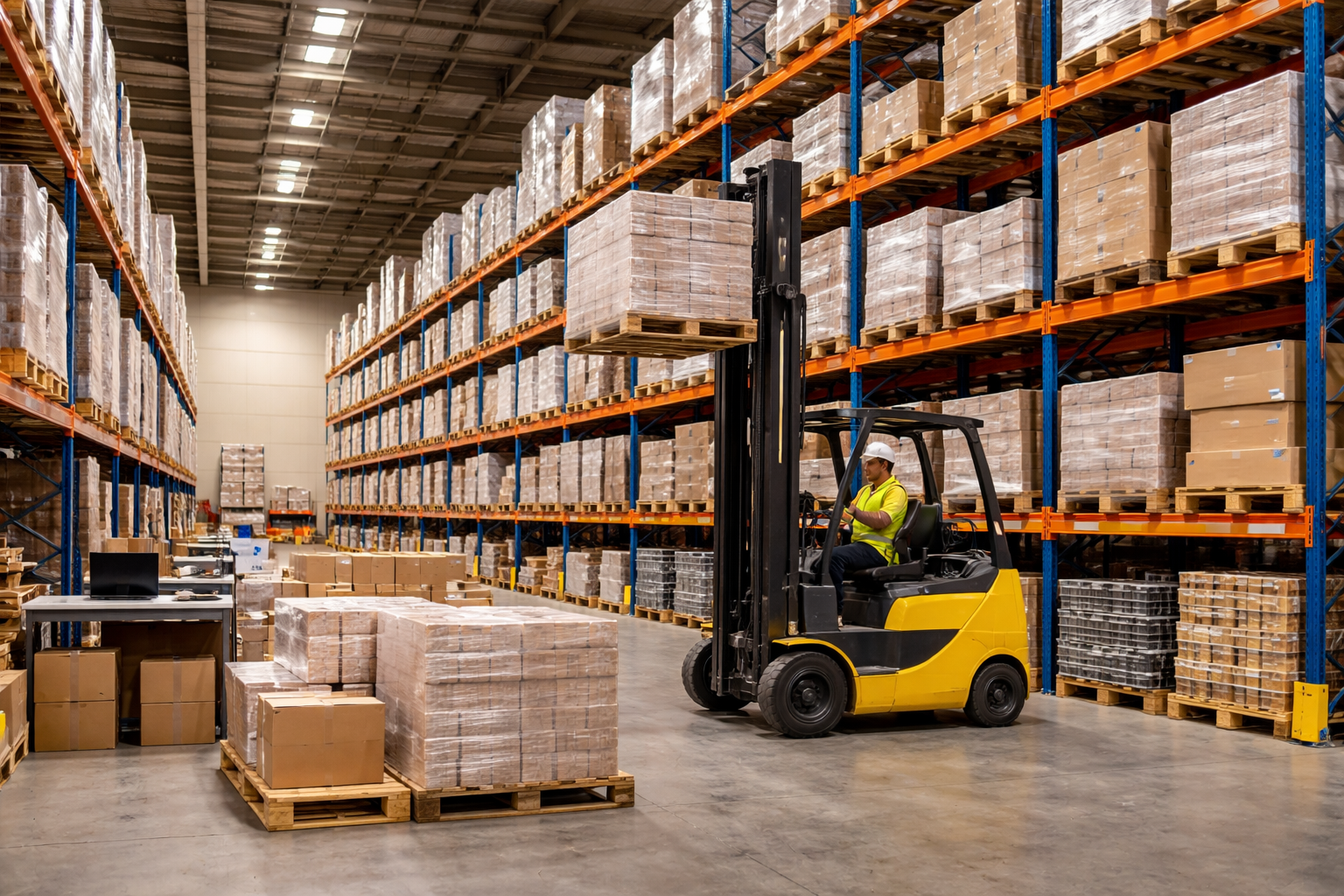
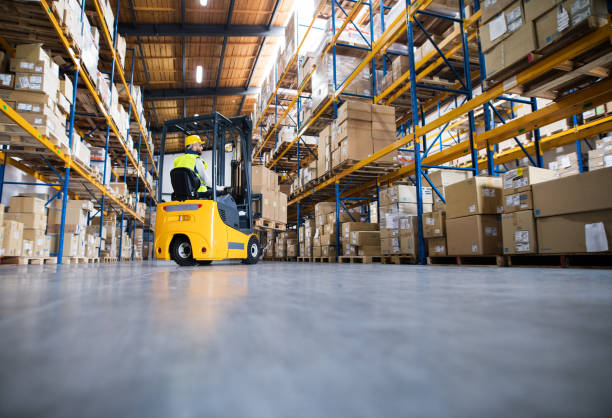
Why inventory organisation depends on the right racking system
Better storage is not just about where stock sits. It is about how easily inventory can be identified, accessed, rotated and controlled.
A well-planned warehouse racking system supports stronger inventory organisation by creating a more structured layout for products, pallets and picking locations.
This can improve:
-
stock visibility
-
inventory accuracy
-
replenishment speed
-
picking efficiency
-
order fulfilment
-
product rotation
-
warehouse safety
The original article also rightly highlights the importance of matching racking choice to stock type, weight and access needs, because inventory organisation and racking performance are closely linked.
Why labelling, maintenance and inspections are critical for warehouse racking safety
Even the best warehouse racking system needs regular oversight.
Safety and performance depend on more than installation alone. Warehouses also need clear identification systems, routine inspections and prompt maintenance to keep racking reliable over time.
Use a clear warehouse labelling system
Strong warehouse organisation starts with clear product and location identification. This can include:
-
barcode labels
-
colour-coded location labels
-
pallet position markers
-
RFID-enabled tracking systems
Clear labelling supports faster picking, better stock accuracy and easier location management.
Inspect racking regularly
Routine inspections help identify early damage or wear before it becomes a bigger safety issue. This includes checking beams, uprights, bolts, load-bearing components and frame alignment.
Repair damage early
Damaged racking should never be ignored. Bent beams, loose connections or compromised uprights can affect structural integrity and create serious safety risks. Prompt repair and replacement reduce downtime and help protect both people and stock.
For businesses investing in warehouse pallet racking, maintenance is a key part of protecting that investment.
What retailers and trade businesses need from warehouse racking today
Today’s warehouse operators need more than simple storage.
They need warehouse racking solutions that support:
-
faster stock access
-
safer product handling
-
better space utilisation
-
easier stock rotation
-
higher storage density
-
improved operational flow
-
flexibility for future growth
For retailers and multi-site businesses, this also means designing storage systems that align with wider supply chain and fulfilment needs. Warehouses now play a bigger role in customer service, order speed and inventory visibility than ever before.
That makes the quality of the warehouse storage system increasingly important.
Warehouse racking is a business decision, not just a storage purchase
Investing in the right warehouse racking system can improve far more than storage capacity.
It can help businesses:
-
maximise warehouse space
-
improve inventory management
-
reduce operational bottlenecks
-
support safer warehouse practices
-
increase picking and replenishment efficiency
-
create a stronger platform for growth
This is why warehouse racking solutions should be planned as part of a broader operational strategy, not treated as a simple product purchase.
The right system should fit the business, the stock profile and the movement patterns of the warehouse — while leaving room for future change.
How Retail Fixtures Australia helps with warehouse racking solutions
At Retail Fixtures Australia, we help businesses create practical, durable and efficient warehouse racking systems built around how their operations really work.
Our solutions support:
-
pallet racking systems
-
warehouse storage racking
-
cantilever racking
-
bulk storage solutions
-
warehouse shelving and layout planning
-
space optimisation strategies
-
storage systems for trade, retail and distribution environments
Whether the goal is to improve pallet access, increase storage density, upgrade outdated racking or design a more efficient warehouse layout, we help clients develop solutions that support performance now and into the future.
Planning a warehouse racking upgrade?
If your current warehouse racking, pallet racking or storage layout is limiting access, wasting space or making stock harder to manage, now is the right time to review it.
A better warehouse storage system can improve efficiency, safety and inventory control while helping your business make smarter use of available space.